
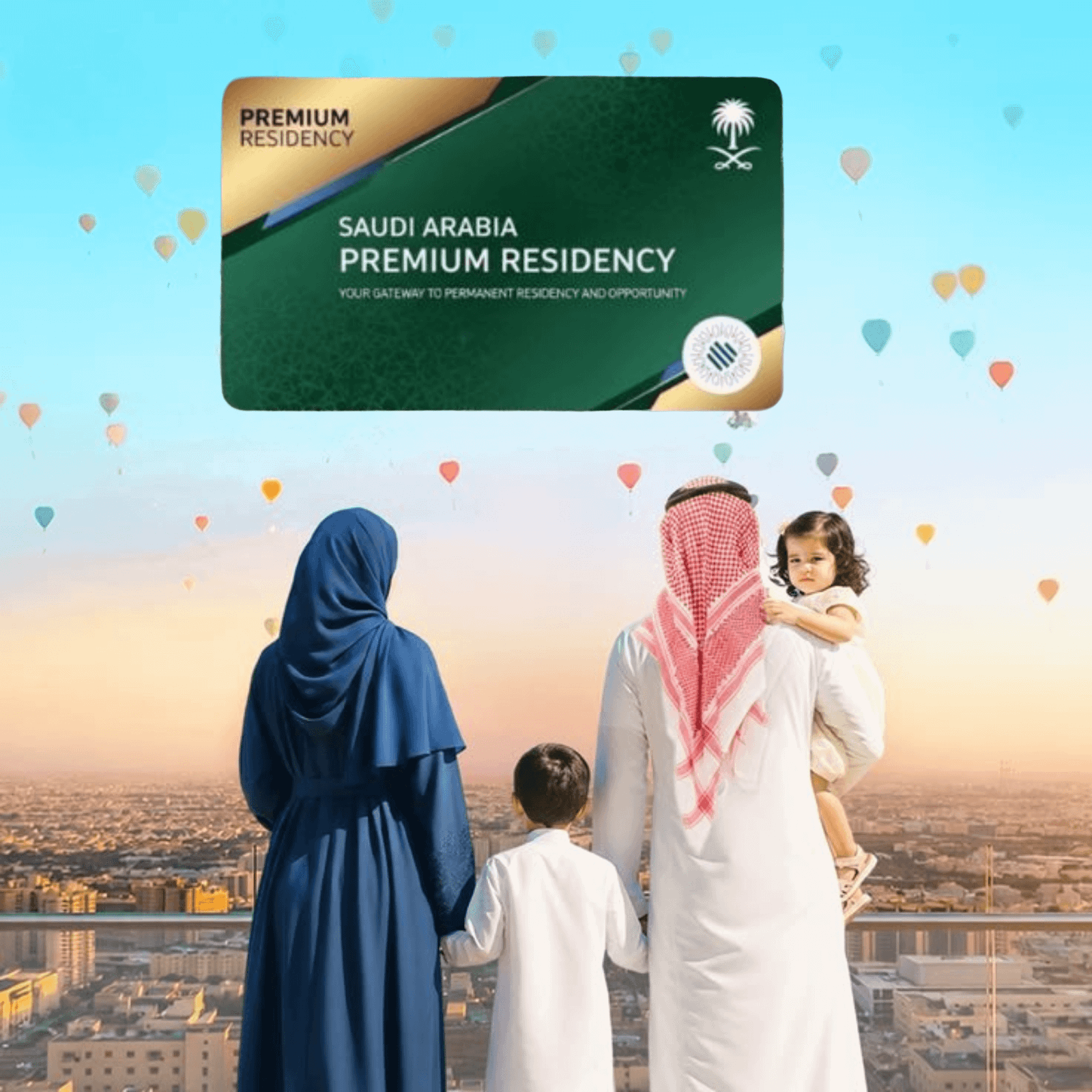
Premium Residency in Saudi Arabia allows eligible applicants to live in the Kingdom with qualifying family members, including spouses, children, and parents. This makes the program particularly relevant for professionals, investors, entrepreneurs, and other eligible applicants planning a long-term future in Saudi Arabia.
Family members can benefit from residency, travel flexibility, and certain private-sector employment rights, subject to applicable regulations. Children are generally included until age 25, while specific provisions apply to children with special needs and unmarried daughters over 25. Parents may also be included, although employment restrictions apply to dependent parents.
This guide explains how Premium Residency in Saudi Arabia works for families, including eligible dependants, age requirements, parents, employment and travel rights, required documents, and important application considerations. It helps applicants understand the key family rules and prepare a clear, well-organized application.
Table of Contents
Can I Include My Family in Premium Residency in Saudi Arabia?
Premium Residency in Saudi Arabia offers eligible skilled professionals, investors, and entrepreneurs greater long-term residency flexibility in the Kingdom. Digital transformation and global competition are also changing where international talent chooses to build its future. Importantly, qualifying holders can reside in Saudi Arabia with eligible family members. In short, Premium Residency can provide valuable residency benefits for both the main holder and qualifying family members.
Key Takeaways
- Premium Residency in Saudi Arabia allows eligible holders to reside with qualifying family members.
- Family generally includes spouses, children under 25, and parents.
- Specific exceptions apply to certain dependants aged over 25.
- Eligible family members can receive residency, travel, and private-sector employment rights.
- Family eligibility and documents should be verified against current official requirements before submission.
Quick Insight:
Saudi Premium Residency defines family more broadly than only spouses and children. Parents can also be included, although dependent parents cannot work inside Saudi Arabia.
Quick Insight:
Children are generally included until age 25. However, children with special needs and unmarried daughters over 25 can remain linked under specific regulatory provisions.
Can I Include My Family in Premium Residency in Saudi Arabia?
Yes. A holder of Premium Residency in Saudi Arabia can reside in the Kingdom with eligible family members.
Saudi Premium Residency regulations define family members as spouses, children under 25 years, and parents.
The regulations also provide specific provisions for certain family members aged over 25.
Children with special needs may remain linked to the Premium Residency holder’s record.
Unmarried daughters over 25 may also remain linked under the applicable regulations.
These provisions make family inclusion an important benefit for professionals planning long-term residence in Saudi Arabia.
Who Counts as a Family Member?
The Saudi Premium Residency regulations provide a clear definition of family.
Eligible family members generally include:
Spouse or spouses
Children under 25 years of age
Parents
The regulations also address specific circumstances involving older children.
Children with special needs may remain linked to the holder’s record.
Unmarried daughters over 25 may also remain linked.
Applicants should always verify their family’s circumstances against current official requirements before submission.
Can My Spouse Live With Me in Saudi Arabia?
Yes. A spouse falls within the official definition of family under Premium Residency regulations.
This allows eligible holders to establish their family life in Saudi Arabia without relying solely on conventional employer-sponsored residency arrangements.
Family records remain connected to the main Premium Residency holder.
Applicants must provide the required family information during the relevant application and residency procedures.
Accurate personal details are particularly important when preparing family documentation.
Names, passport information, and relationship details should remain consistent across submitted records.
Can I Include My Children?
Yes. Children under 25 fall within the standard family definition.
This provision can benefit professionals who want to relocate with their children.
However, age remains an important consideration.
The regulations state that a child’s Premium Residency card generally ends upon reaching 25.
Specific exceptions exist for children with special needs.
The regulations also provide an exception for unmarried daughters aged over 25.
Families should therefore review each child’s circumstances before preparing their application.
Can Children Over 25 Be Included?
The standard definition covers children younger than 25.
However, the implementing regulations provide important exceptions.
Children with special needs may remain connected to the holder’s Premium Residency record.
Unmarried daughters over 25 may also remain linked to that record.
These exceptions should not be treated as universal rules for every adult child.
Families should confirm eligibility based on the applicant’s exact circumstances.
This distinction can prevent incorrect assumptions during document preparation.
Can Parents Be Included?
Yes. Parents form part of the defined family under Saudi Premium Residency regulations.
However, an important condition applies.
Parents must not work inside Saudi Arabia while treated as dependants of the Premium Residency holder.
This condition deserves attention before including parents in long-term relocation plans.
Applicants should consider their parents’ employment intentions before choosing the appropriate residency arrangement.
Can Family Members Work in Saudi Arabia?
The Premium Residency Law provides important employment rights for qualifying family members.
Family members may work within private-sector establishments, subject to applicable Saudi rules.
They may also change employment within the private sector.
However, professions reserved exclusively for Saudi nationals remain excluded.
Employment rules can change according to profession, sector, and regulatory decisions.
Family members should therefore check current employment requirements before accepting a position.
Parents have a separate restriction when included as dependants.
They must not work inside Saudi Arabia while holding that dependant status.
Can My Family Enter and Leave Saudi Arabia Freely?
Premium Residency provides significant travel flexibility for eligible family members.
The implementing regulations allow holders and their family members to exit and enter Saudi Arabia without requiring an exit-entry visa.
Family members must present the cards issued to them.
This benefit differs from many conventional residency arrangements.
It can make international travel easier for families with professional or educational commitments abroad.
Is Family Premium Residency the Same as a Family Visit Visa?
No. These are different arrangements.
Family members linked to a Premium Residency holder receive residency-related rights under the applicable regulations.
A family visit visa serves a different purpose.
Premium Residency holders can also request visit visas for qualifying relatives.
The regulations cover relatives beyond the immediate family definition.
These may include certain ascendants, descendants, siblings, and their children.
The relevant authorities determine applicable procedures for those visit visas.
Therefore, applicants should distinguish between resident family members and visiting relatives.
Are Family Records Linked to the Main Applicant?
Yes. The implementing regulations link family members’ records to the main Premium Residency holder.
The applicant’s electronic account also supports family information required by the Premium Residency Center.
This makes accurate family data essential.
Passport spellings should remain consistent across supporting documents.
Dates of birth should match official records.
Marriage and birth documents should also clearly establish relationships when requested.
Document inconsistencies can create avoidable complications during administrative review.
Does Every Premium Residency Product Allow Family Benefits?
Saudi Premium Residency now includes several different products.
These include Special Talent, Gifted, Investor, Entrepreneur, and Real Estate Owner Residency.
Permanent and renewable fixed-term options also exist within the wider Premium Residency framework.
Family residence represents a general right under the Premium Residency Law.
However, the main applicant must first qualify for the relevant residency product.
Each product can have different eligibility requirements.
Applicants should therefore select their product based on their own professional, investment, talent, or property profile.
Family inclusion should follow the applicable product and regulatory procedures.
What Happens When a Child Turns 25?
Age planning matters for families using Premium Residency in Saudi Arabia.
The implementing regulations generally provide for cancellation when a child reaches 25.
However, specific exceptions can apply.
Children with special needs may remain linked to the holder’s record.
Unmarried daughters over 25 may also remain linked.
Parents should consider these rules when planning long-term family residency.
This becomes particularly important when children approach the age threshold during the holder’s residency period.
What Happens to Family Residency if the Main Permit Ends?
Family residency remains connected to the main Premium Residency holder.
Therefore, changes affecting the main permit can also affect linked family records.
The regulations address cancellation, termination, and relinquishment of Premium Residency.
They also contain specific provisions concerning death or loss of legal competence.
Families should not assume their linked status continues independently in every circumstance.
They should review the applicable procedure whenever the main holder’s status changes.
Why Family Planning Should Start Before Applying
Family inclusion should not become an afterthought.
Applicants should identify every intended family member before preparing their application.
They should confirm passports, relationships, ages, and relevant personal circumstances.
Adult children’s ages deserve particular attention.
Parents’ employment intentions also require consideration.
Applicants should also identify any exceptional circumstances involving dependants.
Early planning can help create a more consistent application record.
It can also reduce unnecessary document corrections later.
Documents Families Should Prepare
Exact document requirements can depend on the applicant’s circumstances.
Applicants should follow the current Premium Residency portal instructions.
Common family records may include passports and evidence establishing family relationships.
Marriage certificates can establish the relationship between spouses.
Birth certificates can establish parent-child relationships.
Additional evidence may become relevant for exceptional dependant circumstances.
Applicants should avoid submitting unnecessary documents without checking current requirements.
Official portal instructions should remain the primary reference.
Why Document Consistency Matters
Family applications involve several connected identity records.
A minor inconsistency can create questions during document review.
Names may appear differently across passports and certificates.
Dates may also differ between translated and original documents.
Applicants should identify these differences before submission.
Translations should accurately reflect the original records.
Relationship evidence should remain clear and readable.
Professional document review can help identify inconsistencies before application submission.
How Elite International Training Supports Premium Residency Applicants
Applicants often need support understanding eligibility and preparing a consistent documentation package.
Elite International Training provides guidance for Saudi Premium Residency applicants and their families.
Its published services include eligibility assessment, profile evaluation, and documentation support.
The company also provides guidance concerning Special Talent Residency applications.
Support can include reviewing professional qualifications and employment information.
It can also cover family-related preparation during the wider application process.
However, final eligibility decisions remain with the relevant Saudi authorities.
Applicants should treat official Premium Residency requirements as the controlling source.
Family Support During Premium Residency Preparation
Family inclusion requires more than adding names to an application.
Applicants should understand which relatives meet the regulatory family definition.
They should also identify exceptions that may affect older children.
Parents require separate consideration because of employment restrictions.
Elite International Training can help applicants organize these details before submission.
This approach can make document preparation more structured.
It can also help applicants identify missing or inconsistent family records.
Professional support should complement official requirements rather than replace them.
Premium Residency for Special Talent Professionals and Families
Special Talent Residency targets qualifying professionals in selected fields.
These include healthcare, scientific, research, and executive categories.
Professionals considering this pathway often evaluate family relocation alongside career opportunities.
Family eligibility can therefore influence the overall residency decision.
Elite International Training provides guidance concerning Special Talent Residency preparation.
Its support includes profile evaluation and documentation preparation.
Applicants should still verify current eligibility criteria through the official Premium Residency Center.
Requirements can change as regulations and program conditions develop.
Can Healthcare Professionals Include Their Families?
Yes, qualifying Premium Residency holders can benefit from the family provisions under the law.
Healthcare professionals must first satisfy the requirements of their relevant Premium Residency product.
Once approved, applicable family provisions can support relocation with eligible dependants.
This can matter for doctors and specialists planning longer careers in Saudi Arabia.
Family stability can influence decisions about international professional relocation.
However, healthcare professionals should separate family eligibility from their own professional eligibility.
Both areas require accurate supporting information.
Can Executives Include Their Families?
Executives who successfully obtain Premium Residency can also benefit from applicable family residency provisions.
The executive must first qualify under the relevant Premium Residency criteria.
Family members then remain subject to the regulatory family definition.
This means age and relationship rules still matter.
Executives relocating with older children should review those rules carefully.
Parents should also understand the restriction concerning employment while treated as dependants.
Can Researchers Include Their Families?
Researchers approved for qualifying Premium Residency can also relocate with eligible family members.
The researcher’s own eligibility requirements remain separate from family inclusion rules.
This distinction matters during application planning.
The main applicant must establish eligibility for the selected Premium Residency product.
Family members must then meet the applicable relationship and dependant requirements.
Applicants should avoid mixing the main applicant’s professional evidence with family relationship documentation.
Keeping these document categories organized can simplify preparation.
Family Benefits Beyond Residency
The Premium Residency framework provides several rights affecting family life.
Eligible family members can reside with the main holder.
Applicable family members can work within the private sector.
They can also change qualifying private-sector employment.
Family members can exit and enter Saudi Arabia without an exit-entry visa.
These rights make Premium Residency in Saudi Arabia different from many conventional residency arrangements.
However, each right remains subject to Saudi laws and implementing regulations.
Health Insurance and Family Members
Health insurance is another practical consideration for Premium Residency families.
Saudi Arabia’s Insurance Authority provides a Premium Residency insurance inquiry service.
The service covers Premium Residency holders and insured family members.
Families should confirm their insurance status through the relevant official systems.
Insurance arrangements should form part of relocation planning.
Applicants should not assume residency approval automatically resolves every healthcare administration requirement.
Common Family Application Mistakes
One common mistake involves misunderstanding the age limit for children.
Another involves assuming every relative qualifies as a dependant.
Parents may also overlook the restriction concerning employment.
Applicants sometimes confuse family residency with relative visit visas.
Document inconsistencies can create another problem.
Names and dates should match across passports and relationship documents.
Applicants should also avoid relying on outdated eligibility information.
Current regulations and official portal instructions should guide every application.
How to Prepare Before Adding Family Members
Start by identifying every family member who may relocate.
Then confirm each person’s relationship to the main applicant.
Check children’s ages carefully.
Review any circumstances involving special needs or unmarried daughters over 25.
Confirm whether included parents intend to work.
Review passport validity and personal information.
Collect relationship documents according to current portal requirements.
Finally, compare all information before submission.
This preparation can help create a clearer family application record.
Why Official Verification Remains Important
Saudi Arabia’s Premium Residency framework has expanded significantly.
New products have created pathways for professionals, investors, entrepreneurs, and talented individuals.
Regulations can also develop over time.
Applicants should therefore avoid relying solely on older articles or social media posts.
The Premium Residency Center remains the primary authority for current application requirements.
Professional guidance can support preparation and interpretation.
However, government authorities determine eligibility and approval.
Is Premium Residency in Saudi Arabia Suitable for Families?
For eligible applicants, family inclusion represents a significant feature of the program.
The framework allows qualifying holders to establish longer-term residence with close family members.
Spouses, eligible children, and parents fall within the regulatory family definition.
Certain exceptions also support specific dependants aged over 25.
Travel and private-sector employment rights can provide additional flexibility.
These features can support families considering a longer-term future in Saudi Arabia.
The decision should still reflect each family’s circumstances and objectives.
Conclusion
Premium Residency in Saudi Arabia can support eligible applicants who want to relocate with their families.
The regulations include spouses, children under 25, and parents within the family definition.
Specific exceptions can also apply to certain dependants aged over 25.
Family members may receive valuable residency, travel, and private-sector employment rights.
However, applicants should understand age limits, relationship requirements, and employment restrictions before applying.
Digital government systems increasingly simplify how residency information and family records are managed.
Accurate digital records therefore make careful document preparation even more important.
Elite International Training can support applicants with eligibility assessment and organized Premium Residency documentation.
Official Saudi regulations should always remain the final reference for eligibility and approval.

Frequently Asked Questions
Yes. Eligible holders of Premium Residency in Saudi Arabia can reside with qualifying family members, including spouses, children, and parents.
Children are generally included until age 25. Specific exceptions apply to children with special needs and unmarried daughters over 25.
Yes. Parents are included within the regulatory family definition. However, parents included as dependants cannot work in Saudi Arabia.
Eligible family members can work and change jobs within the private sector, subject to Saudi employment rules and profession restrictions.
Yes. Premium Residency holders and linked family members can exit and re-enter Saudi Arabia without an exit-entry visa.
Yes. Current implementing regulations allow an unmarried daughter over 25 to remain linked to the Premium Residency holder’s record.
Yes. The regulations provide an exception allowing children with special needs to remain linked to the holder’s Premium Residency record.